Published: April 6, 2026
Last updated: April 6, 2026
Author: Doko MD Education Team
Clinical review: Doko MD Clinical Review Team
Patients often hear a lot about A1C, but time in range has become one of the most useful ways to understand glucose control in daily life. Instead of looking only at an average over months, time in range shows how often glucose stays within a target zone throughout the day and night.
What Time in Range Means
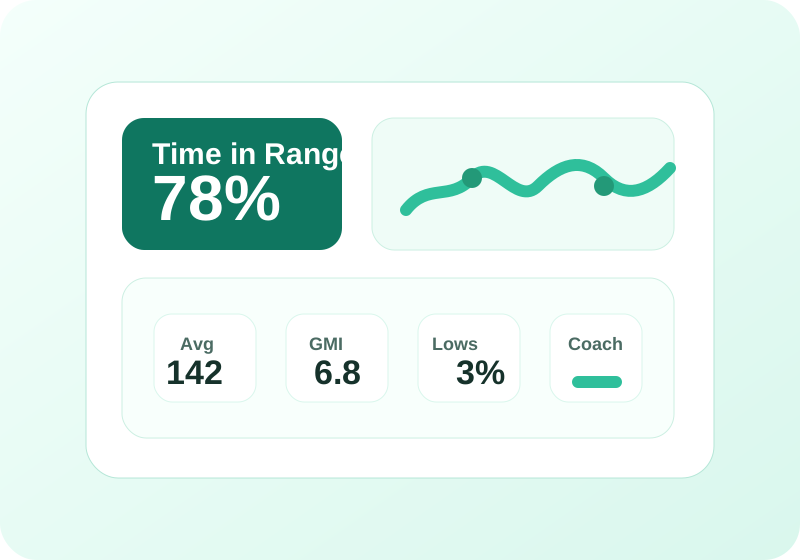
Time in range is the percentage of time your glucose readings stay within a target range. It is usually calculated from continuous glucose monitoring data. That makes it especially useful for patients who want a clearer picture of what is happening between appointments.
Why It Is Different From A1C
A1C and time in range are related, but they are not the same. A1C estimates average glucose over a longer period. Time in range shows how often glucose is stable versus too high or too low. A patient can have an acceptable-looking average and still have large swings that matter clinically.
Why Patients Find It Helpful
Time in range helps connect daily decisions to glucose results more quickly. Meals, activity, medication timing, sleep, stress, and missed doses all become easier to evaluate when patients can see whether those choices are improving stability or creating more time above or below range.
What Clinicians Use It For
Clinicians use time in range to understand whether a patient's current plan is working in real life. It can help explain why A1C stays high, why overnight lows happen, or why post-meal spikes are still common even when occasional fingerstick readings look acceptable.
Why CGM Makes This Easier
Without CGM, it is difficult to estimate how much of the day glucose is actually inside or outside the target zone. CGM makes time in range practical because it provides continuous data rather than isolated checks. That is one reason time in range is often discussed together with CGM coaching and treatment review.
How Patients Can Use It Between Visits
- Watch whether the same meal or routine keeps pushing glucose out of range.
- Review overnight patterns rather than focusing only on daytime readings.
- Track whether medication timing changes improve stability.
- Use one or two trend goals at a time instead of trying to fix everything at once.
Related Pages
Frequently Asked Questions
Time in range is the percentage of time a person's glucose readings stay within a target range, usually measured with CGM data.
No. A1C reflects average glucose over a longer period, while time in range shows how often glucose stays within the target zone day to day.
It matters because it helps patients and clinicians see daily glucose stability, not just an average, which can lead to more targeted treatment and routine changes.